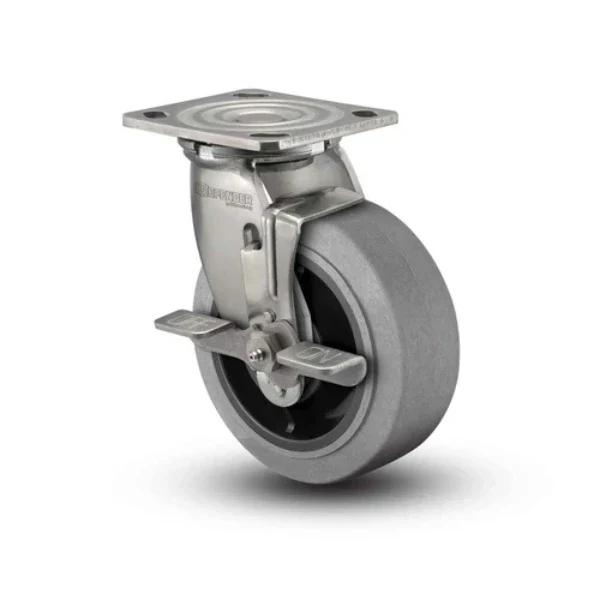
ESD (electrostatic discharge) and conductive casters dissipate static charge from rolling equipment to help prevent damage to electronics, ignition in explosive atmospheres, or interference in sensitive instrumentation. Conductive casters provide direct path-to-ground (resistance < 10⁴ Ω); static-dissipative casters are slower discharge (10⁵–10⁹ Ω). Both are commonly used in electronics manufacturing and explosive-atmosphere environments. Contact our team for official manufacturer documentation and specifications.
Specifications
| Conductive | < 10⁴ Ω surface resistance |
|---|---|
| Static-dissipative | 10⁵–10⁹ Ω |
| Documentation | Contact our team for official manufacturer documentation and specifications. |
| Tread options | Conductive PU, conductive rubber, conductive nylon |
Common Applications
- Electronics manufacturing — PCB assembly, component handling
- Aerospace avionics assembly and test stands
- Cleanroom semiconductor and biotech equipment
- Explosive atmospheres (paint booths, solvent-handling, ammunition)
- Pharmaceutical filling and aseptic processing
When to Choose ESD / Conductive Casters
- Your facility maintains a documented ESD-protected area
- Equipment carries or contacts sensitive electronics
- Operating environment is an explosive atmosphere (paint, solvent, etc.)
- Existing audit findings flag static accumulation risk
Product Photos
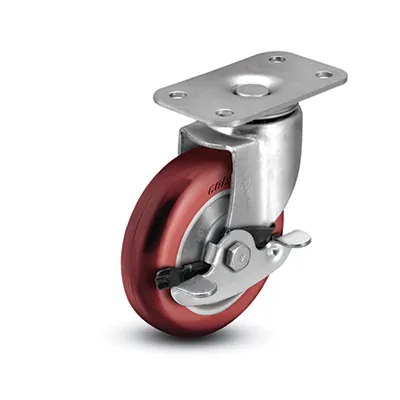
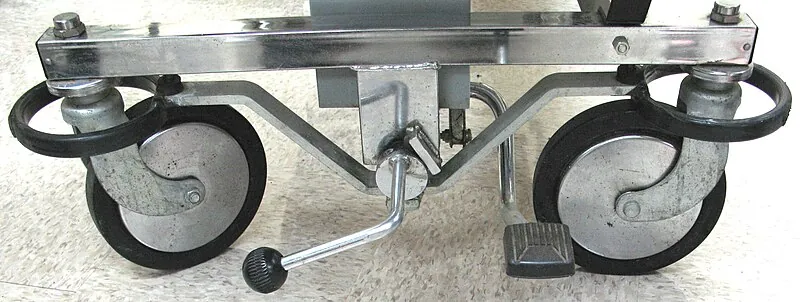
Manufacturer photography from our distribution catalog. Click any photo for a larger view.

Recommended Brands
Brands we carry that perform best in this category.



Industries That Use ESD / Conductive Casters
We've specified this caster category across these South Florida and Latin American verticals.
Live during business hours
Real expert. No IVR. Quote by phone.
A caster or material handling specialist answers — 71 years of experience picking up the phone.
Mon–Fri · 8:30am – 5:00pm EST